Wednesday, 10 September 2014


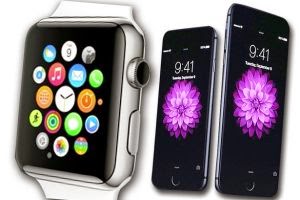
Apple did not let down its admirers despite failing to surprise them on Tuesday. In line with the 

numerous leaks and rumours ahead of its launch event, the iconic Cupertino, California company 

unveiled two new thinner, bigger and faster smartphones — iPhone 6 and iPhone 6 Plus — and a 

new smartwatch simply called the Apple Watch.
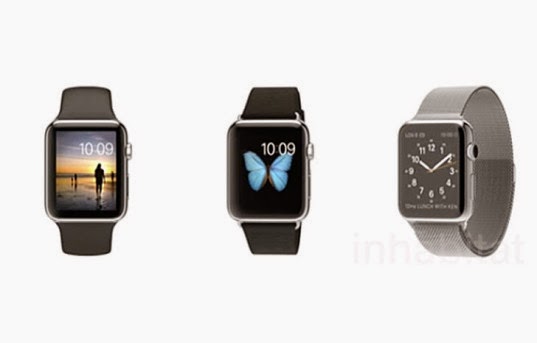


The two phones finally take Apple to the big-screen smartphone segment, sporting 4.7- and 5.5-inch screens respectively. The iPhone 6's 4.7-inch display sports a resolution of 1334x750p, while the iPhone 6 Plus's 5.5-inch display sports a resolution of 1920x1080p.


Apple announced it has scrapped the 32GB variant with iPhone 6. It will come in 16, 64 and 128GB options. In the US market, where telecom carriers provide subsidies on smartphones, the two models — iPhone 6 and 6 Plus — will be available for $199, $299 and $399 respectively, on a two-year contract. The iPhone 6 (unlocked version) starts at $649 while the iPhone 6 Plus (unlocked version) starts at $749.

In the Indian market, the two iPhones will be launched in India on October 17, according to Apple's local website. There is no official word on pricing yet.

According to Apple, the displays deliver higher contrast, dual domain pixels for more accurate colour at wider viewing angles and an improved polarize.


iPhone 6 and 6 Plus are the thinnest smartphones Apple has ever made. iPhone 5S and 5 are 7.6mm thick, but iPhone 6 and 6 Plus are even thinner at 6.8mm and 7.1mm respectively. These are, of course, not the thinnest smartphones globally, as that honour lies with Chinese Gionee's Elife S5.5 which has a thickness of 5.5mm.

One thing that even Apple fan boys will admit openly and bitterly is their gripe with the iPhone battery. The good news is that battery life of iPhone 6 and 6 Plus is relatively better than that of iPhone 5S. iPhone 6 will deliver 3G talk time of 14 hours and run 10 hours if the user is browsing the internet on 3G and 4G networks. The bigger model, iPhone 6 Plus, will offer 3G talk time of 24 hours and 12 hours of web browsing on 3G and 4G.
As rumoured, iPhone 6 Plus will be a $100 more expensive for each storage variant compared to iPhone 6. iPhone 5S will now cost $99 on a two-year contract, while iPhone 5C is free.

Powered by the new A8 processor, iPhone 6 is up to 50% more energy efficient, so you can have higher sustained performance, claimed Apple.
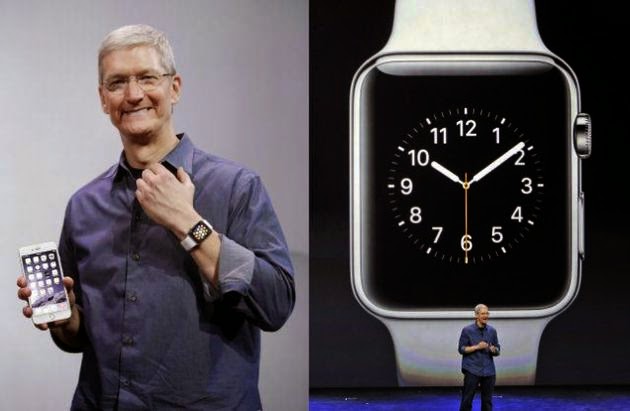


The 64-bit CPU architecture-based A8 processor is 20% faster in application processing and 50% faster in rendering graphics compared to its predecessor. It is able to sustain performance-intensive tasks like playing a game at higher frame rates.

Apple also increased the pixel density of the two smartphones, with the smaller one having 38% more pixels at 1334x750p resolution and the bigger iPhone 6 Plus sporting 185% more pixels with screen resolution of 1920x1080p.

Apple called the new display panels Retina HD, a "new generation" of iPhone screens. These LCD panels feature ion strengthened glass, but there was no word on the long-rumored sapphire glass panel.

The two iPhone 6 models sport an 8MP iSight camera that features phase detection. Despite no increase in camera resolution, iPhone 6 takes 43MP panorama photos. And like many rivals, including Samsung Galaxy Note 4 and S5, HTC One (M8) and LG G3, iPhone 6 and 6 Plus feature Optical Image Stabilization (OIS) for blur-free photos and videos.

The new iPhones support landscape mode. Apple also unveiled its own take on single-handed operation mode, wherein touching the Home button quickly will shrink down the whole display area such that the buttons on the top can be accessed easily.
The Power button in the iPhone 6 and 6 Plus is on the side. It features a barometer sensor that can measure relative elevation.
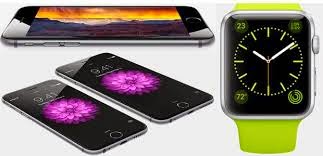


Apart from the two new iPhones, Apple unveiled its first-ever smartwatch, named Apple Watch.
Apple has also announced Apple Pay a new mobile payments service that works with iPhone 6 and iPhone 6 Plus through NFC, a dedicated chip called the Secure Element, and Apple's Touch ID fingerprint scanner. Apple Pay will also work with the newly announced Apple Watch, extending the service to owners of iPhone 5, iPhone 5C and iPhone 5S.

Users can simply add their credit or debit card on file from their iTunes Store account for payments. Apple Pay supports credit and debit cards from the three major payment networks, American Express, MasterCard and Visa, issued by the most popular US banks including Bank of America, Capital One Bank, Chase, City and Wells Fargo.

In addition to the 258 Apple retail stores in the US, some retailers that will support Apple Pay include Bloomingdale's, Disney Store and Walt Disney World Resort, Duane Reade, Macy's, McDonald's, Sphere, Staples, Subway, Walgreen's and Whole Foods Market. Apple Watch will also work at the over 220,000 merchant locations across the US that have contactless payment enabled.

Thursday, 4 September 2014


Display and design
Apple iPhone 6 has 4.8 inch retina display at a resolution of 1920x1080 pixel quality. This phone has an amazing built quality with glass and aluminum body. Keeping the external design same overall as the ancestral iPhone 5 generation, Apple did a number of upgrades to the gadget to reap huge profits.
OS and Tech
An upgraded version of A6 processor called A7 CPU has been used which is built on 64 bit architecture. Integrating this chip iPhone6 will provide up to 2 times faster CPU performance. 64 bit version of iOS 7 has been used for dealing with Operating System dependencies. Apple integrates M7 motion co-processor for handling the accelerator, compass and gyroscope. This phone can also run Open GL 3.0 games.
Multimedia and Entertainment
Apple incorporates 13MP rear camera and 0.3MP front camera in iPhone 6. The camera comes with a cool list of features and has amazing quality. It has the dual flash for capturing photos and records videos of 1080p HD quality at 30fps. They added a feature to take still photos while recording the video. Its rear camera can record 720p HD video and can capture photos at 1280x960 pixels.  Apple iPhone 6 comes with 4 optional inbuilt memories i.e. 16GB, 32GB, 64GB and 128GB. Apple iPhone 6 supports maximum mp3 and video formats. 
Battery and connectivity

For connectivity, Apple iPhone 6 has updated versions of GPS, GLONASS, Wi-Fi, NFC and Bluetooth for better and lightning fast connectivity. This phone’s talk time is up to 10 hours on 3G and standby time up to 250 hours in one full charge of battery. Video playback time is up to 10 hours and audio playback time is up to 40 hours. Apple iPhone 6 can be regarded as ideal support for 3G and 4G LTE networks worldwide and thus it enables us to download content at blazing fast speed.
Verdict


Blowing away the market with iPhone 5s and 5c, Apple is soon supposed to launch the Apple iPhone 6 with newly upgraded OS and amazingly strong and powerful processor. Apple iPhone 6 has amazing touch experience with HD screen as usual though the Camera quality is exceptionally enhanced. Nicely curved body with aluminum back and edges and this phone is also supposed to be launched in 3 new awesome colors Gray, Gold and Silver.
Lenovo has a range of Android based smartphones in its S Series including the Lenovo S860 which was announced at the Mobile World Congress 2014 in February this year and was subsequently launched in India towards the April end.


Priced at Rs 21,500, the Lenovo S860 competes against many other popular devices such as Samsung Galaxy Grand 2, Motorola Moto X, Micromax Canvas Knight, and so on. Here is our detailed analysis of the Lenovo S860 smartphone.

Design


Lenovo brings the S series of smartphone labelling them as the devices with style and substance (hardware). The new S860 appears to be a sturdy device and offers unibody chassis design. Offered in Titanium colour option, Lenovo S860 features a metallic unibody chassis with brushed aluminum look. In the front, the S860 has a glass surface with a thin bezel.

Its metallic unibody frame certainly makes it resistant to fingerprint and normal scratches. However, it will certainly retain the dents and scratches from sharp objects. The S860 certainly feels good in hand and offers premium feel. In the front are the three capacitive backlit Menu buttons which almost like non-existent in terms of visibility. On the left of the device is the dual-SIM tray which needs to be taken out with the SIM Ejector Tool bundled along. On the right side are the volume control button and the power key. At the bottom of the phone is the speaker mesh resembling to the one also found in the Apple iPhone 5S.
At the end of the day, Lenovo S860 does feel fairly premium in hand and offers decent grip too. However, it does feel a bit heavy at 190 grams.

Hardware

Lenovo has loaded the S860 with a quad-core 1.3 GHz MediaTek MT6582 mobile chipset which is coupled with Mali-400MP2 GPU for graphics. This chipset is fairly common among the sub-Rs 20,000 devices. Lenovo has also added 2 GB RAM to make the system, user interface and apps run smoothly in the S860.

This smartphone features a 5.3-inch IPS LCD touchscreen display that offers great viewing angles and supports multi-touch for up to five fingers. The display supports 1280x720 pixel resolution and pushes pixel density of 277 pixels per inch which is on the lower side considering that recent devices in this price range come with full HD (1080p) resolution.

Lenovo S860 comes in dual-SIM configuration - two micro-SIM slots to be specific of which one supports 3G networks. For faster download, S860 offers WiFi 802.11 b/g/n and has WiFi Hotspot support as well. Lenovo has also armed it with Bluetooth 3.0 with A2DP support. Location based services will be aided by GPS with A-GPS. Lenovo has also added the proximity sensor and there is accelerometer to aid with the gaming apps in the S860.
The phone has a dedicated microphone for active noise cancellation. Lenovo has placed a micro USB 2.0 port and also placed the USB on-the-go cable in the total bundle. The retail box includes a charging adapter, micro USB to USB cable, headsets and quick start guide.

Storage

The Lenovo S860 offers 16 GB on-board storage but has no memory card slot. Surprisingly, there is no higher built-in storage offering model of S860. So you have to contend with the limited physical storage or have to rely on the cloud storage facilities offered by many such as Dropbox, Box.net, etc.

Software 

Though this smartphone was announced couple of months ago, it still ships with Android 4.2 Jelly Bean update with the Lenovo Launcher loaded on top of it. However, the Android 4.4.2 KitKat update has been released for the S860. The new Lenovo Launcher basically the same user interface as the Vibe series of smartphones.


All the apps are distributed on the homescreen and there is no application drawer. In order to fit in several apps, one can always make folders for similar category of apps such as Social or Games. Of course, at any point of time one gets bored, then there are several third party launchers. The user interface is quite simple and resembles the one found in the Gionee Elife series of smartphones. The look and feel can be changed using the Theme Center.

For those used to check the Battery Stats get the Power App to enjoy the Battery consumption based on software and hardware separately. Also, there are multiple controls to play around for getting maximum battery life. The anti-virus comes pre-loaded. Apart from that, the Lenovo offers multi-tasking option where in one has to scroll to check out the running apps. Also, the Cleaner has been integrated in the user interface that removes unwanted notifications at once and frees up some RAM. Themes are the only possible change of the custom skin apart from other important tweaks. Not to forget, Lenovo also armed it with the Premium DOit apps that are meant for sharing content, syncing the devices or taking a backup.
We found the Pocket Dial prevention mode quite useful to avoid random dialing while the phone is in the pocket. Ample options to activate or deactivate features are available in the Feature Settings in the Settings app. There is a default Video app but no native music application as the phone relies on Google Play Music. With changed icons and interface, the overall experience would only make the learning curve bit steeper for the consumers.


Camera

Lenovo S860 has an 8 megapixel camera at the back; an LED flash is located below that camera. The camera app has the usual run of the mill modes to enjoy imaging. We were certainly amazed by the results the 8 megapixel camera could produce. The resultant images captured showed superb colour reproduction and managed to retain the details in the images.


The only issue we faced was while focusing on the subjects; the camera takes its own sweet time for the same. We hope this gets fixed in next update. Even for video recording, the camera worked like a breeze along with the dedicated mic which cancelled out the ambient noise to a fair extent.
Certainly, the S860's camera gives a tough competition to other smartphones available in the segment offering 10 MP to 13 MP image sensor.


Performance 

Lenovo S860 has been packaged with decent hardware components. The benchmarks we ran did show some promising results for the graphics. Hence, we did enjoy gaming on the smartphone. The S860 managed to hit the score of 17,897 in AnTuTu Benchmark and managed to rank just below Samsung Galaxy S3 in quick comparison. However in the Vellamo's Metal benchmark, the S860 scored 743 and managed to leapfrog the Galaxy S3.


For the graphics, the S860 managed to run 55 frames per second with the Nenamark2 benchmark. The phone scored the 2861 in the Ice Storm Unlimited mode of the 3DMark benchmark which means it will just manage to run the modern graphics intensive games. Finally in the BasemarkX in High Quality mode, the smartphone scored 1690.


We faced some issue with the network but then realized that the network was patch due to rains. Other than that, the phone delivered clear voice quality for the calls. The full HD videos ran smoothly without any jars unless several apps were running in the background.


We found the user interface quite interesting and believe that many would be able to enjoy it. However, one would have spend decent amount of time to get accustomed with the user interface and the icons. Overall performance of the Lenovo S860 was just above average.

Battery Life

Lenovo has repeated its strategy to add massive battery in its smartphones. Just like the good old Lenovo P780, the S860 comes along with a 4000 mAh battery. Since the battery is non-removable, one has to deal with that. The massive battery ensures that the phone can go on and on for over a day. In fact, we managed to run the phone for two days and charged it on the third day.

However, to be noted that the usage was very average - watching video for 20 mins roughly, music for an hour or more, couple of phone calls and texts, web browsing and using social networks through out. Being bit stingy on resources, the Location based services - one of the major battery hogs, were not turned on. Even on heavy usage, the phone can manage to run just about a day. Lenovo has done a tremendous job of squeezing one of the most important component inside and thus delivers amazing battery life.

Final Thoughts 

Lenovo S860 was launched for Rs 21,500 but now can be purchased for Rs 19,000 approximately from handful of e-commerce portals online. One thing we would like to point out that Lenovo does not approve the warranty of the products purchased from all e-Commerce websites. So far, there is no clarity on which e-commerce websites are authorised dealers. So if you are considering to purchase this device, you better give a buzz to 1800-3000-9991 Toll Free number to check whether the retailer is authorised or not.

The Lenovo S860 brings a metallic sturdiness along with awesome battery life to the table. While the user interface does need a facelift, it can be fixed using third party launchers and icon packs. If you are not one of the benchmark rank brags, the Lenovo S860 can easily impress you.

However, take a look at the Lenovo S860's competition - Gionee Elife S5.5, Xiaomi Mi3, Micromax Canvas Knight A350 and Samsung Galaxy Grand 2. All these four smartphones have good enough reason(s) to trump the Lenovo S860 in terms of size, hardware and performance. Nonetheless, the Lenovo S860 still manages to walk a step ahead with the amazing battery life.


Leading Indian handset manufacturer, Spice has in the past came out with several Android KitKat based smartphones including the Mi 520 which is available for around Rs 8,500 these days. The handset features a 5 inch touchscreen, quad core processor, 1 GB RAM, 8 megapixel auto focus rear camera, 2 megapixel front camera etc.

Design and Display 

The Spice Mi 520 comes in black, yellow and red colours; we have the blood-red version which is quite spectacular and is definitely an eye-candy. Note that the phone comes in all black front while the rear is painted in three different colours mentioned above. The back panel has glossy finish but isn't slippery. The Mi 520 is quite lightweight as well.

In the handset, the volume and power button are placed side by side, with ample space in between, in the right hand side while the 3.5 mm jack rests along with the micro USB port at the top. In the back, the rear camera rests along with an LED flash while a speaker grill is located at the bottom. In the front, there are three touch buttons below the display.

The 5 inch display is a fingerprint resistance but does not get scratches easily. This screen has high definition resolution and has decent touch input. The display has also decent brightness for outdoor operations. Being an IPS LCD display, it offers good viewing angles as well.

Spice is offering a flip cover with the phone for free. Besides, the phone comes with a travel charger and a headset.

Hardware and Performance

The Spice Mi 520 is one of the few phones to come with the latest Android KitKat operating system and it uses the vanilla Android interface. To run the operating system, there is 1 GB RAM and a 1.3 GHz quad core processor. This combination is decent enough for most games and apps available in the Google Play store.

Like most devices in the sub-Rs 10,000 category, it too has 4 GB ROM and a 32 GB micro SD card slot. Of 4 GB ROM, 1.5 GB was allocated as internal storage while 895 was available as phone storage. It does not have USB OTG functionality either.


The Spice Mi 520 comes with a 2000 mAh battery which offers decent back up. Users with low and medium usage would get about a day's back up but if you use 3G/WiFi browsing all day and listen songs for half an hour or so, the phone would need charging after about 7-8 hours. The phone has though good standby of about 2-3 days.

Camera 

The Spice Mi 520 has an 8 megapixel auto focus rear camera and a 2 megapixel front camera. The rear camera comes with 4X digital zoom facility which though you should avoid at all cost as like in any other phone, using digital zoom deteriorates the picture quality to a great extent. The handset also has HDR and Panorama modes which are quite useful.


As far as the quality of the 8 megapixel rear camera is concerned, it manages to capture decent pictures in good lighting and in HDR mode. It is quite quick to focus on objects as well. However, in low lighting, the picture quality goes for a toss. If you are capturing images from close distance, use its flash light but don't expect too much improvement. The front 2 megapixel camera is okay for video calling but is quite average when it comes to selfless.
Rating for camera: 6/10

Connectivity

The Spice Mi 520 comes with two SIM slots with dual standby feature. Note that you can use 3G SIM cards in both the slots unlike 2G+3G combination in most Android devices. It has WiFi (b/g/n) as well for internet access. You can also use it to create a WiFi hotshot.
top five handset
For transferring files, there is a micro USB 2.0 port in the Mi 520 which also has Bluetooth.

Conclusion 

The Spice Mi 520 is currently available for around Rs 8,500 which is a bit on the higher side considering phones like Asus Zenfone 4, Motorola Moto E, and the new Mi Redmi 1S are priced below Rs 7,000. The Mi 520 has decent features and offers an appreciable performance but its price puts it on a disadvantageous position.

Gionee had introduced the world's slimmest smartphone Elife S5.5 earlier this year. Now the company is almost ready with its younger successor smartphone dubbed as Elife S5.1 smartphone. Gionee's new Elife S5.1 smartphone is mere 5.1 mm thick and is aimed for the mid-range segment. It houses Qualcomm's mobile chipset and will feature a 4.8-inch HD AMOLED display images. Chinese website ZOL published several images of the upcoming Elife S5.1 handset.
Gionee's upcoming Elife S5.1 smartphone offers 4.8-inch amoled display with 1280x720 pixel resolution and thereby pushing great pixel density of 306 pixels per inch. Gionee has powered this slim handset with quad-core 1.2 GHz Qualcomm Snapdragon 400 MSM8926 processor and Adreno 305 GPU. The Elife S5.1 has 1 GB RAM and offers 16 GB built-in storage. It has no memory slot though.


Gionee Elife S5.1

The Elife S5.1 smartphone supports TDD-LTE network along with high speed packet access capability and WiFi support. The smartphone supports MicroSIM network. At the rear, it has an 8 megapixel camera and an LED flash. The camera comes with 28 mm lens and f/2.4 aperture. In the front, the Elife S 5.1 has a 88 degree wide-angle 5 megapixel camera to click selfies. By default, the smartphone runs Amigo 2.0 UI layered on top of the Android 4.3 Jelly Bean update.
Gionee Elife S5.1
Gionee has placed 2100 mAh battery inside the smartphone. The design of the Elife S5.1 resembles and is slight improvement over the Elife S5.5 device. Interestingly, it packs a slightly low powered mobile chipset compared the S5.5 device. We can expect the launch of the Elife S5.1 in coming few weeks.


Chinese handset maker, ZTE has silently launched an Android KitKat based smartphone, called ZTE V5. The smartphone is now available for Rs 10,999 from Snapdeal.
As per the listing, the ZTE V5 comes with a 5 inch touchscreen with high definition resolution and Dragontrail glass covering that would protect the screen from scratches. It is based on Snapdragon 400 quad core processor and 1 GB RAM. The ZTE V5 is based on Android KitKat operating system but has a custom user interface called Nubia 2.0.


The ZTE V5 has a 13 megapixel rear camera with Sony Exmor CMOS sensor while in its front lies a 5 megapixel camera with BSI sensor. It has an LED flash in its rear panel as well. The ZTE V5 has 4 GB of internal memory of which about 2 GB will be available for users. There is a micro SD card slot as well which can accommodate a card of up to 32 GB.
Besides, this 9 mm thick handset has a 2400 mAh battery which claims to offer 400 minutes of talktime. The ZTE V5 has dual SIM, Bluetooth 4.0, micro USB 2.0, GPS, and WiFi as well.


Tuesday, 2 September 2014


After disrupting the budget segment, Xiaomi now has its eyes set on the entry-level smartphone market in India with its Redmi 1S smartphone. The Xiaomi Mi 3 boasted high-end hardware at a budget price, and now the Redmi 1S features mid-range hardware for the price of an entry-level phone.

At a price of Rs 5,999, is the Redmi 1S a game changer, redefining price segments? We try to find out in our review...


Build and design

Xiaomi Redmi 1S plays safe when it comes to design. The phone retains the rectangular slab form factor we've seen on the Mi 3 but looks like its compact version. Its corners are more rounded and the red coloured navigation keys on the front (true to the 'Redmi' monicker) give it a distinct look. The front panel also features a 4.7-inch display and a 1.6MP front-facing camera.


Redmi 1S has a removable back cover that wraps around the edges. The black coloured cover has a matte finish and doesn't look frail. It is a bit susceptible to smudges, though. There were no creaks and wobbles and the cover fits snugly with the phone. It is also easy to take the cover off thanks to the small opening at the right hand side.

The back of the phone features an 8MP camera lens, LED flash and a speaker outlet in addition to some Mi branding. Removing the back cover reveals the 2,000mAh battery, two slots for regular sim cards (Xiaomi will offer a sim adapter in the box) and a microSD card slot. Xiaomi will also offer back covers in different colours giving consumers the ability to customize their phones.

The power and volume rocker keys (metallic) are conveniently located at the right edge, while the micro-USB port is at the bottom edge. The 3.5mm headset jack sits at the top. The metallic keys offer good tactile feedback.


Overall, the Redmi 1S does not look and feel like a Rs 6,000 phone. It feels much more durable and well-built compared to phones in the same price bracket.

Display

The phone sports a 4.7-inch 720p IPS display that has Asahi Dragontrail glass protection.

At the risk of sounding repetitive, the display is certainly the best we've seen at this price. Colours look vivid and brightness levels were optimum. Sunlight legibility was above average though the display is a little reflective. Viewing angles were really wide and there was no distortion.

Thanks to the higher display resolution, images and text appeared to be crisp and sharp. We also found the capacitive buttons and the touch screen to be extremely responsive.

Software

Xiaomi Redmi 1S runs MIUI, a heavily customized version of Android. You would be familiar with the MIUI ROM if you're an Android enthusiast and like flashing different ROMs on your device. The ROM is available for a large number of Android phones and tablets.

While the MIUI software is based on Android 4.3 (Jelly Bean), the interface looks totally different.


In fact, people used to draw parallels between MIUI and iOS as the former follows a similar navigation structure.

The UI is devoid of an app drawer and app icons and widgets are spread across the home screens. The unified home screen-app launcher style may come across as user-friendly to people who have not used an Android phone before. But it will take some time to get used to if you have already been using an Android smartphone. You can of course download and install an alternate launcher.

Xiaomi has promised that it will update the software to Android 4.4 KitKat, later this year. The phone will also be updated to MIUI 6, the next iteration of MIUI.

Unlike the MIUI ROM and the phone's Chinese variant, the Indian version of the phone comes preloaded with Google Play Store and all Google apps including Maps, Gmail, YouTube and Hangouts.

One of the highlight features of MIUI is the ability to customize the user interface with themes, downloadable wallpapers and clocks. The Themes app offers a large number of free themes, each of which comes with a different set of icons, wallpapers, app switcher, font style, sounds, lock screen styles and even system apps.


Lite Mode

The Redmi 1S offers a Lite Mode that features a simplified Home screen and menus. One can switch to the Lite Mode by going to the Settings and enabling the mode under the General Settings tab. The phone reboots to the Lite mode which looks a bit like Windows Phone with its big tiles for most core apps, large fonts and simplified versions of phone and messages apps.


The Lite Mode is good for first time smartphone users and the elderly since it doesn't overwhelm with the hundreds of options, settings and apps part of the Android smartphone experience. One can reboot to the full-fledged UI mode by going to the Settings app and disabling Lite Mode via the system settings.

Camera

Xiaomi Redmi 1S sports an 8MP rear camera accompanied by an LED flash. According to Xiaomi, the phone's 5-piece lens has an Æ’/2.2 aperture to capture more light, and 28mm wide-angle lens to cover a wider area. The camera hardware of the phone is the best in the segment with similarly priced rivals lagging behind it by leaps.

The camera app is similar to the one on the Mi 3, offering 'Simple' as well as an 'Advanced' mode with the latter offering granular settings for contrast, saturation, sharpness, anti banding, and exposure, among others.It also offers HDR, Panorama, Burst modes in addition to filters. The video mode offers standard and fast motion recording options.


Images captured by the camera in day light turned out well with decent level of detail, accurate colour reproduction and good contrast. Images shot in low-light were grainy but comparitively better than other phones available in the same segment.

We did face some issues trying to focus, especially while shooting close-ups but the end result made up for these small niggles.

The front camera is also good for clicking selfies and for video calls. Unlike the Mi 3, it doesn't try to predict your gender and age!


The phone is capable of shooting 1080p video (in addition to 720p and 480p) and the results were surprisingly good for a phone that costs less than Rs 6,000. Overall, the Redmi 1S comes with a capable camera that won't disappoint you.

Performance

Xiaomi Redmi 1S is powered by a 1.6GHz Qualcomm Snapdragon 400 quad-core processor with 1GB RAM. It comes with 8GB internal storage out of which 6.1GB is available to the user. It also features a microSD card slot that supports storage cards of up to 64GB.

We did not notice major lag while navigating through the phone's menu, browsing the web and multimedia and scrolling inside apps. Having said that, the transition effects tend to slow down things a bit and unfortunately, there's no way to turn these off. These effects are visible while opening and closing apps and expanding folders.

In synthetic benchmarks, Redmi 1S beats higher priced phones like the Moto G by a margin. The phone scored 19,562 in Antutu, 10,775 in Quadrant and 56.6 in Nenamark 2 benchmark tests.

The phone was able to play Full HD video files without any problems.

Connectivity features of the device are 2G, 3G, Wi-Fi, Bluetooth 4.0 and microUSB 2.0. It also supports USB On-the-Go, so you can use an adapter (or a micro-USB equipped drive) to connect USB storage devices.


Redmi 1S offers good call quality and signal reception and we did not encounter issues while making calls even in areas where cell signal is relatively weaker. The phone was able to lock to GPS without any hiccups.

It offers FM radio with recording capability and the app works even without plugging in headphones. We were able to play most popular video and audio file formats. The phone offers customized audio settings for different kinds of headphones and offers excellent quality sound output with headphones on.

The external speaker also offers loud sound output though the quality deteriorates at higher levels. Although the outlet is located at the back, the sound does't get muffled due to the phone's slightly rounded back.

It packs a 2,000mAh battery (removable) and will last you a full working day (14-15 hours) if you put the screen brightness at the highest level and use 3G data all the time. You'll be able to make about 1-2 hours of phone calls, play some casual games and browse the web in this time period. It lasted more than 20 hours with light to medium usage.

Your mileage may vary with different usage patterns. The phone offers three power modes and you can choose the economy mode to save some juice.

We really feel that the phone redefines the entry-level segment with its mid-range specifications and good performance.

Gaming

We were able to play games like Temple Run 2, and Subway Surfers, without encountering frame drops or freezes. We were also able to play Real Racing and Riptide GP 2 without encountering any lag or stutter. However, we observed that the phone got warm after a few minutes of gaming. Also, there are some compatibility issues with Asphalt 8. The game started crashing after we finished the first round, till we rebooted the phone.

Verdict
At a price of Rs 5,999, it won't be wrong to say that Xiaomi Redmi 1S is a game changer. It redefines the entry-level smartphone segment and creates a new benchmark. The phone is not just good on paper but is also an all-round performer with solid build quality, superior performance and a great camera.

Of course, Xiaomi achieves this price by following an unconventional sales model which the other players may find difficult to replicate. The company has been panned for the flash sales system and for keeping the phone exclusive to one online retailer but that is how it chooses to operate and sell all its phones.


Xiaomi has promised that it will offer more units every week, learning from past mistakes. It also plans to offer accessories for the phone from day one. Mind you, Redmi 1s doesn't come with earphones, protective cover or screen guard so you'll need to spend extra for acquiring these.

Even after these additional overheads, Xiaomi Redmi 1S is still the best entry-level smartphone available in the Indian market when it comes to delivering bang for your buck. If you're not able to get your hands on the phone, the Asus ZenFone 4 is the next best option.
Subscribe to RSS Feed Follow me on Twitter!